
A Local’s Guide to Flooring for Toronto Weather: Moisture, Temperature, and Seasonal Wear
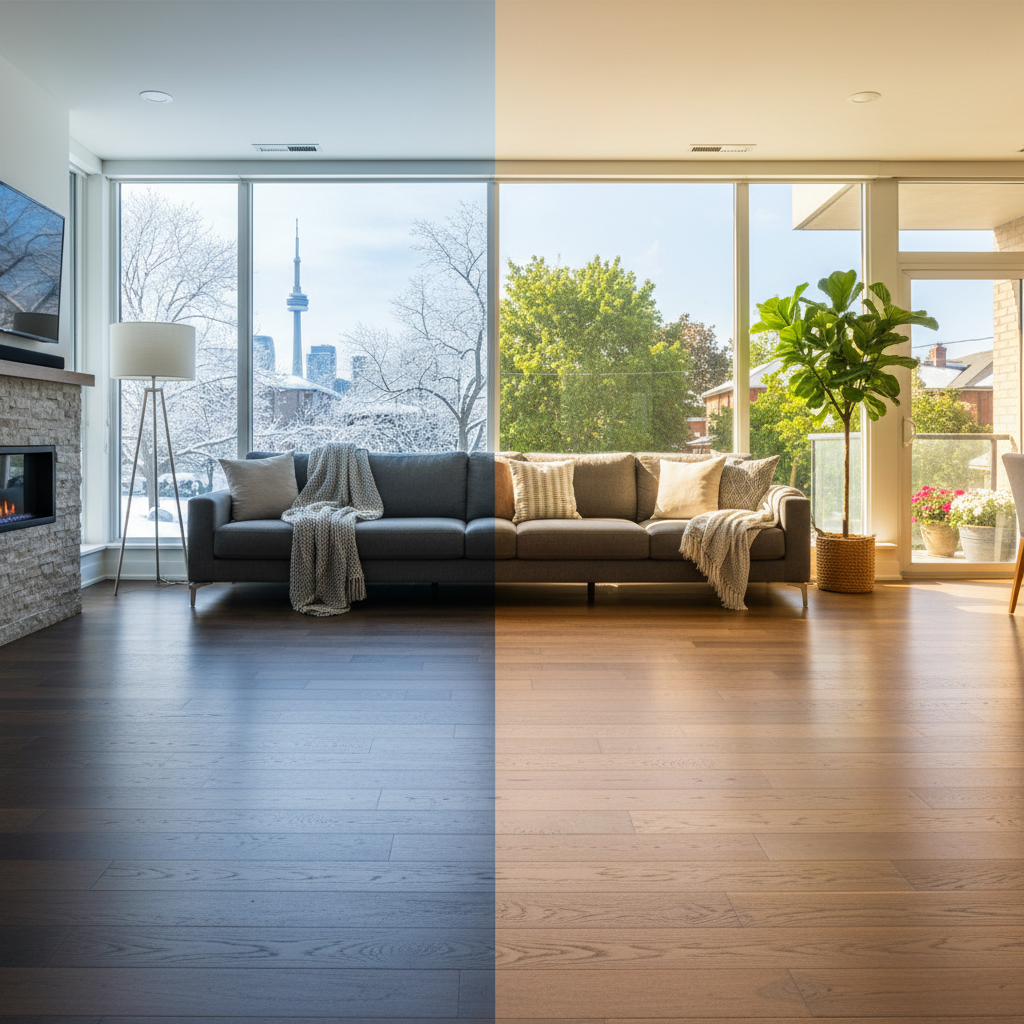
Toronto weather can be unpredictable. Hot summers, freezing winters, and significant humidity swings all impact the performance and longevity of home flooring. Choosing materials that withstand these changes is critical for avoiding gaps, warping, swelling, and premature wear.
Hardwood remains a popular choice in Toronto, but homeowners must select the right type. Engineered hardwood performs better than solid hardwood because its layered construction makes it more stable during humidity changes. Using a proper humidifier in winter and dehumidifier in summer helps maintain balance and protect the floor.
Luxury vinyl plank is one of the most weather resistant flooring choices. It does not expand or contract dramatically, making it ideal for areas like entryways, basements, and kitchens where temperature and moisture levels fluctuate. Many Toronto families prefer luxury vinyl because it is waterproof, durable, and warm underfoot compared to tile.
Carpet still plays a key role in bedrooms and basements, adding warmth and insulation. Toronto homeowners often choose premium carpet for second floor bedrooms to help reduce noise and maintain comfort in winter.
If your home is older or has less insulation, moisture levels may fluctuate more dramatically. In these environments, waterproof flooring such as luxury vinyl, tile, or engineered hardwood tends to be the safest option.
Proper installation also matters. Toronto weather requires acclimatization, meaning flooring should rest in the home for at least 48 to 72 hours before installation to adjust to indoor conditions. Skipping this step is one of the biggest causes of shifting and buckling.
Ultimately, the best flooring for Toronto weather is one that balances performance with lifestyle needs. Engineered hardwood, luxury vinyl, porcelain tile, and quality carpet each thrive when properly installed and maintained.
-
It can, but engineered hardwood performs better because it handles humidity swings more effectively.
-
Yes, it is one of the most stable materials for moisture and temperature changes.
-
Absolutely. This step prevents shifting, warping, and gaps.
