
Winter Flooring Care in Toronto: Salt, Slush, and Humidity Control
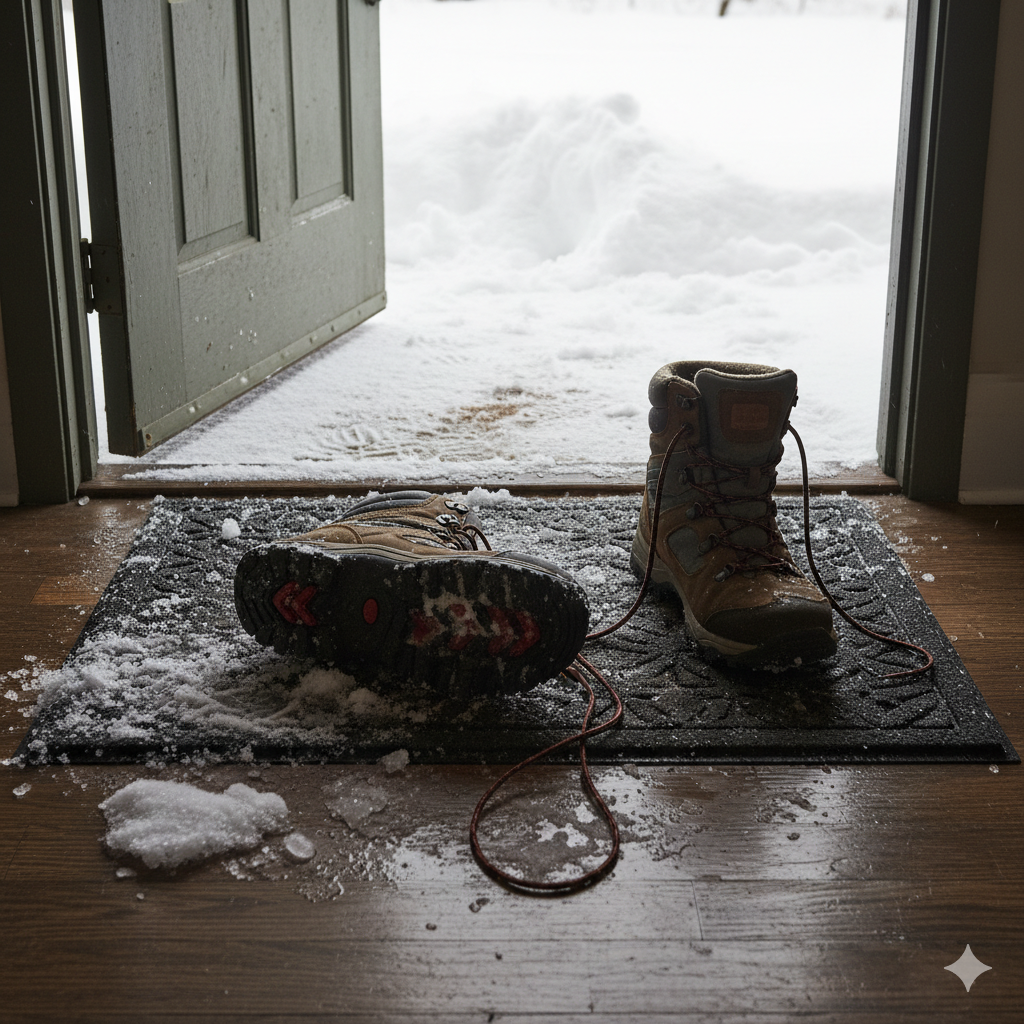
The three winter threats to flooring
Salt & grit: act like sandpaper. Left unchecked, they dull the finish and create micro-scratches.
Slush & standing water: can creep under boards, swell wood-based cores, and stain grout lines.
Low humidity: below ~30% RH can shrink hardwood, causing seasonal gaps and squeaks.
Entryway defense: mats, trays, and routine
Use the two-mat rule—a coarse outdoor mat to knock off salt and a super-absorbent indoor mat to capture melt. Add a boot tray to contain puddles and empty it nightly. Do a quick microfiber sweep in entries and kitchens each evening—30 seconds removes the grit that causes most scratches.
Hardwood in winter: humidity and finish care
Keep indoor humidity around 35–45% RH if possible. A small room humidifier or whole-home system makes a big difference. Protect traffic lanes with runners and ensure furniture has felt pads. Wipe spills immediately to avoid edge staining. Use a finish-safe hardwood cleaner—avoid oil soaps unless specifically approved by your floor manufacturer.
Vinyl and laminate: salt, slush, and safe cleaners
Choose non-slip winter mats that won’t skid on tile. Sealed cementitious grout resists stains better; in mudrooms and entries, consider epoxy grout for maximum protection. For white salt film, use a neutral tile cleaner—avoid harsh acids unless the tile/grout manufacturer recommends them.
Pets, boots, and daily habits
Set up a seat and hooks at the door so removing boots is easy. Keep a towel for paws—salt crystals scratch floors and irritate pets. Rotate and wash runners weekly. Quick, consistent habits beat marathon cleanups.
Maintenance checklist
Daily
Shake outdoor mat and empty boot tray
Quick microfiber sweep in entries and the kitchen
Weekly
Damp mop with product-safe cleaner (vinyl/laminate/tile)
Vacuum rugs/runners; check for trapped grit
Check indoor humidity and adjust settings
Monthly
Replace worn felt pads
Reseal high-traffic grout lines if needed (per product guidance)
Inspect thresholds and transitions for movement
Common questions
-
Target 35–45% RH. Below 30% increases the risk of hardwood gaps and squeaks.
-
Use a pH-neutral cleaner made for your floor type. Avoid vinegar or bleach unless approved by the manufacturer.
-
Some rubber backings can discolour vinyl. Choose vinyl-safe mats or place a barrier underlay.
