
Types of Flooring for Home Renovations & New Builds: The Smart Buyer’s Guide
Hardwood vs. engineered hardwood
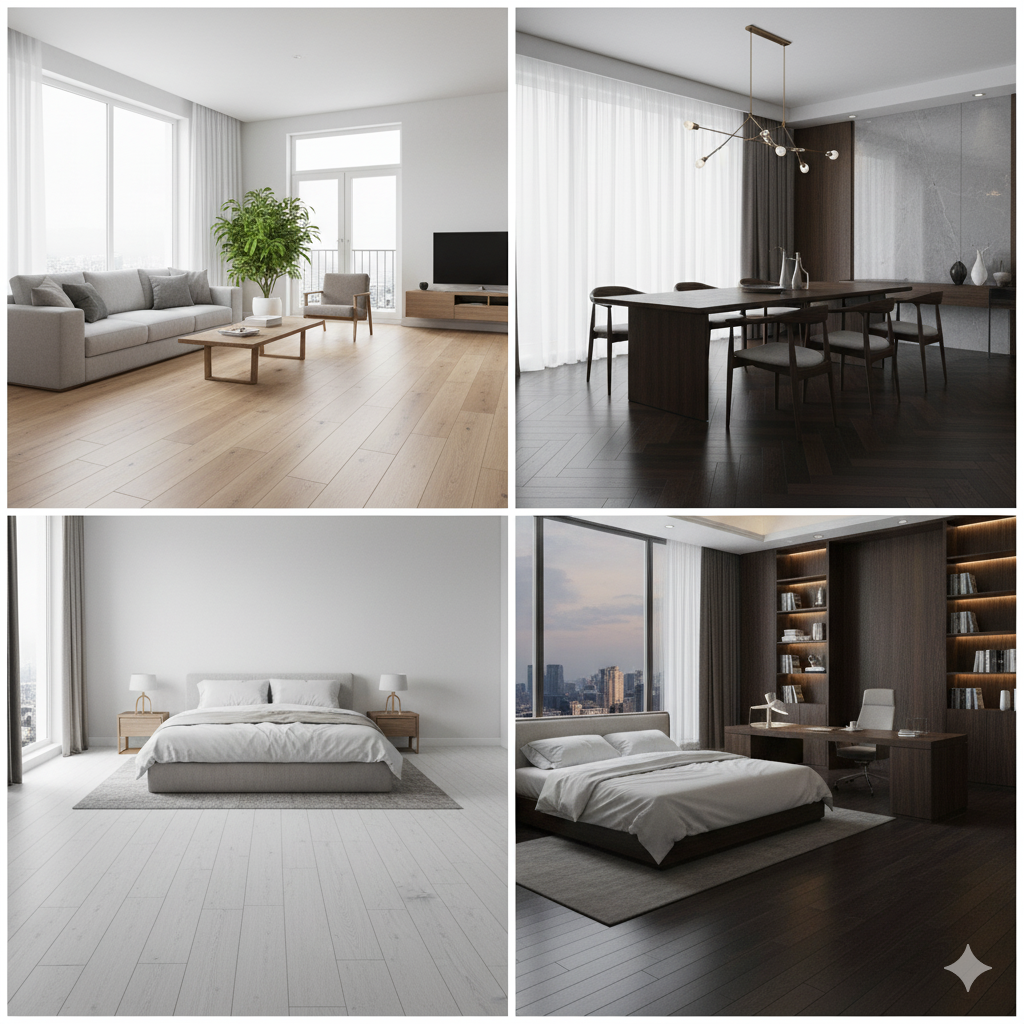
Solid hardwood is timeless and re-finishable. It suits main-floor living rooms and bedrooms where humidity swings are moderate. It adds resale value and a premium feel, but requires strict moisture control and more install expertise. Engineered hardwood pairs a real-wood veneer with a stable core (ply or HDF). It handles seasonal movement better and works well over concrete slabs and radiant heat, making it a top choice for condos and basements (check manufacturer specs). Finish and veneer thickness drive price; opt for reputable brands with durable factory finishes.
Pros (hardwood/engineered): high-end look, good resale, warm underfoot, wide style choice.
Consider: higher material cost, sensitive to moisture, may need acclimation and pro install.
Vinyl (LVP) vs. laminate
Luxury Vinyl Plank (LVP) is waterproof, resilient, and easy to clean. It’s ideal for kitchens, basements, mudrooms, and rentals. Modern textures and embossing make wood looks convincing. Use a quality underlay for comfort and sound.
Laminate delivers strong scratch resistance and a firm, wood-like feel at a friendly price for living rooms and bedrooms. It is moisture-resistant (not waterproof)—wipe spills quickly and avoid wet mopping.
Pros (LVP/laminate): fast floating installs, budget flexibility, broad styles.
Consider: laminate dislikes standing water; LVP can show subfloor telegraphing without proper prep.
Tile (porcelain/ceramic)
Tile is the durability champion for baths, showers, entries, kitchens, and some outdoor areas (verify frost rating). Porcelain typically has lower water absorption and higher strength than ceramic, making it the default for floors and wet zones. For safe indoor floors, check DCOF (≥~0.42 wet) and pick textures that improve traction. Patterns (herringbone, large-format) elevate design but add labor and layout time.
Pros: long-wearing, waterproof surface, endless looks (stone, concrete, marble).
Consider: colder/harder underfoot; plan for heated floors where comfort counts.
Carpet and area rugs
Carpet softens bedrooms, stairs, media rooms, and helps with acoustics. Choose denser piles for durability and stain-resistant fibers for family spaces. Area rugs layer beautifully over hardwood or LVP to define seating zones and protect traffic lanes. On stairs, a runner adds safety and quiet.
Pros: warm, quiet, forgiving on stairs, cost-flexible.
Consider: not suited to wet areas; periodic deep cleaning recommended.
How to choose: room-by-room quick guide
Kitchen & entry: LVP or porcelain tile for water, salt, and slush resistance; add mats and good grout.
Living & dining: Engineered hardwood for premium feel; laminate or LVP for budget and durability.
Bathrooms & laundry: Porcelain tile first; consider heated floors for comfort.
Basements: LVP for moisture tolerance; ensure subfloor is level and dry.
Bedrooms: Engineered hardwood + area rug, or carpet for softness and sound.
Stairs & halls: Carpet runner or engineered hardwood with nosings; add felt pads and runners for wear control.
Pro tip: Budget for prep (leveling, moisture barriers, old-floor
Common questions
-
For many modern builds, yes. It’s more dimensionally stable, installs over more subfloors, and top-tier finishes are excellent. Solid wins if you want multiple deep sand-and-refinish cycles over decades.
-
If comfort and fast installs matter, LVP is great. If you want maximum heat resistance and longevity with radiant floor options, porcelain tile is hard to beat.
-
Confirm building IIC/STC targets and approved underlays before purchase. Many engineered hardwood and LVP systems meet requirements with the right pad.
-
Not required, but radiant heat + porcelain transforms baths and entries. Ensure your flooring is rated for radiant systems and follow temperature limits.
Helpful internal links
Ready to compare samples and get a tailored plan for your rooms? Visit our showroom or book a free in-home estimate.
We’ll help you choose the right mix—by room, budget, and lifestyle—and handle installation with the proper prep,
underlays, and trims.
